Dreaming of stepping from your North End backyard onto your boat and cruising out with confidence? If you own or plan to buy a waterfront home in Palm Beach County’s North End, you need the right match between your vessel and the property’s dock, water depth, and bridge clearances. It can feel complex, but once you know what to check, you can protect your investment and your time on the water. This guide gives you a clear, step-by-step framework to evaluate docks, draft, and bridges before you buy. Let’s dive in.
North End boating basics
The North End sits along the Atlantic Intracoastal Waterway and its connected canals. From most residential docks, you reach the ICW first, then continue to an inlet for ocean access. Your route may cross fixed or movable bridges, and depths can vary outside the marked channel.
Tides in southeast Florida are modest compared with many coasts, but tide height, seasonal water levels, and storm surge still matter. They affect both your under-keel clearance and how you design or use the dock. Always assume conditions change over time with shoaling and dredging.
A sound plan starts with two controls: the shallowest point on your route and the lowest bridge you must pass under. Identify both before you write an offer or finalize due diligence.
Dock options and what to look for
Not all docks suit every boat. Match the dock type, layout, and equipment to your vessel and how you plan to use it.
Dock types at a glance
- Fixed, pile-supported dock. Stable walking surface, common where depths are steady and wave action is moderate.
- Floating dock. Rises and falls with the tide. Helpful where water levels swing or a fixed approach is impractical.
- Finger piers and T-heads. Create side-tie slips and head-in options for one or multiple boats.
- Private single-slip vs. multi-slip layouts. Many residential docks are sized for one to three boats; community marina-style docks serve more vessels and offer more services.
Equipment that matters
- Cleats and bollards. Check number, spacing, and backing to secure lines in wind and wake.
- Pilings. Material, diameter, spacing, and condition are key. Look for wear, rot, marine borer damage, or corroded hardware.
- Boat lifts or davits. Verify weight rating and beam fit for your vessel. Review maintenance history and controls.
- Shore power and water. Confirm amperage (common setups include 30-amp and 50-amp) and panel condition with proper breakers and grounding.
- Fuel and pump-out access. If you run larger boats, know where you will fuel and pump out nearby.
- Seawall or bulkhead condition. Check for seepage, settlement, cracks, or signs of failure. Elevation relative to typical water levels matters for resilience.
- Fenders and chafe protection. Wake-rich stretches benefit from rub rails and fendering.
Structural and permitting checks
- Overall dock condition. Inspect decking, fasteners, and connections for corrosion or fatigue. Ask for repair records.
- Mooring configuration. Ensure the dock suits how you will tie up, side-to or stern-in.
- Ownership and submerged lands. Confirm riparian rights and any submerged land leases or easements that affect rebuilds or expansions.
- Insurance and code. Some insurers require specific piling embeds, straps, and lift lashings for hurricane exposure; verify early in your process.
Depth and draft: can your boat use it?
Water depth controls whether you can berth and move safely. You will calculate a margin called under-keel clearance.
- Draft is the distance from the waterline to the lowest part of your hull or propulsion.
- Under-keel clearance is the water beneath your keel. A common rule of thumb is to keep at least 10 to 25 percent of your draft or 1 to 2 feet, adjusted for local conditions.
- Chart depths are shown relative to a reference level, often Mean Lower Low Water. Actual depth changes with tide and any shoaling since the chart was made.
A simple step-by-step check
- Find charted depths from your dock to the controlling channel and along your route on official charts.
- Identify the shallowest spot on that route and note the chart’s depth reference.
- Add the predicted tide height for your planned transit time to the charted depth.
- Subtract your vessel’s draft. The result is your available under-keel clearance.
- Compare that number to your safety margin. Increase your margin in silty or shoal-prone areas.
- Factor in squat at speed, wave action, and any recent sedimentation or dredging you learn about.
If your available clearance is tight, plan to move at higher tide or commission a professional depth sounding at low tide before you commit.
Typical draft ranges
Use these ranges to frame your search, then confirm your actual model’s specs.
- Skiffs and small center consoles: about 0.5 to 1.5 feet
- Dual-console runabouts and bowriders: about 1 to 2.5 feet
- Express cruisers and sportboats: about 2 to 4 feet
- Trawlers and pilothouse yachts: about 3 to 5+ feet
- Sportfish boats: about 3 to 5 feet
- Sailboats: shoal keels about 3 to 5 feet; fin keels about 5 to 8+ feet
- Motor yachts and superyachts: about 4 to 12+ feet, depending on design
Sedimentation and dredging
Depths change with time. Channels may shoal between dredging cycles, and private canals can be shallower than the ICW. Ask sellers for last-measured depths at mean low water and any records of permitted dredging. For larger or deeper-draft vessels, a fresh sounding at low tide is often the cleanest answer.
Bridges and air draft essentials
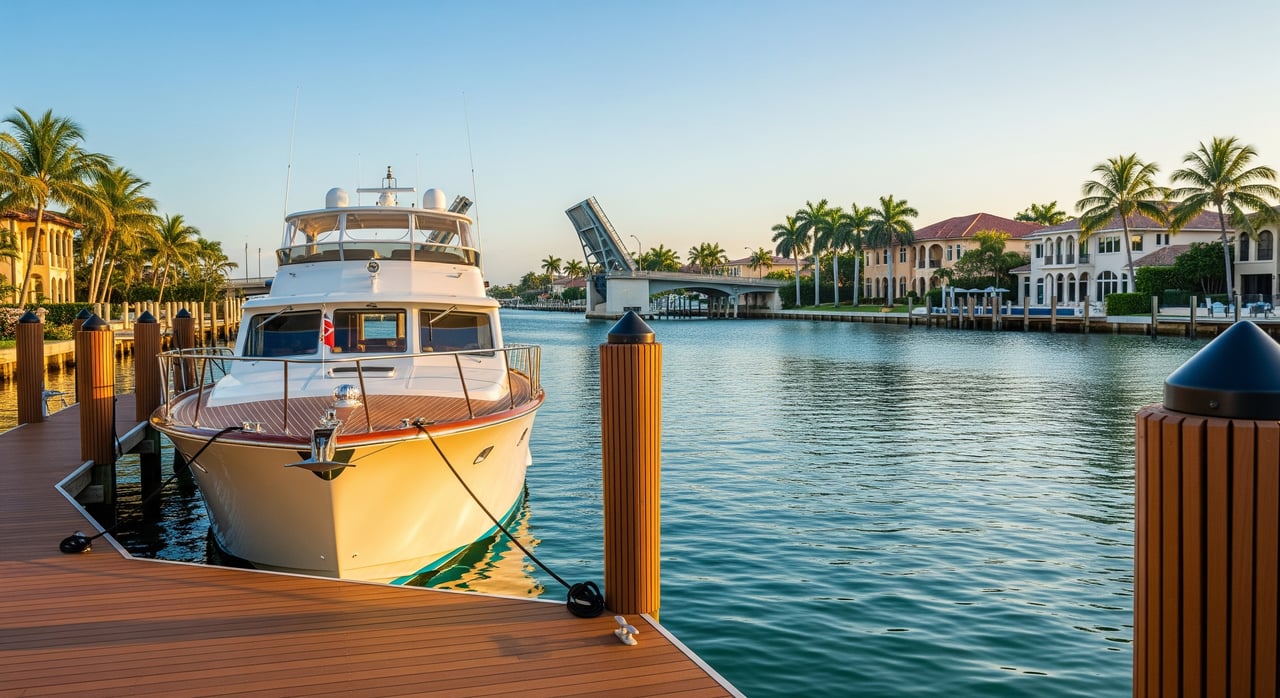
Bridges are the second control on your route. Your vessel’s air draft must clear every bridge between your dock and the inlet.
- Fixed bridges have a set clearance measured at a reference water level, often mean high water. Lower or higher tides will change the actual clearance at the time you pass.
- Movable bridges open on schedule or on demand. You need to know operating hours, radio procedures, and any temporary changes.
Measure your vessel’s air draft at typical load and waterline. Give yourself a healthy margin below the lowest bridge on your route, especially in wind, chop, or strong current.
Find your controlling point
- Map the route to the inlet and mark each bridge and the shallowest channel segment.
- The lowest fixed bridge or the most restrictive movable bridge is your controlling point.
- If bridge or depth margins are close, plan your transits for tide and confirm current operations before you go.
Operating tips for bridge transits
- Check official notices for temporary restrictions and schedules.
- Note whether clearances are referenced to mean high water or another datum.
- If needed, some boats can drop antennas or a radar arch, but confirm feasibility and any warranty implications before you rely on it.
Buyer’s practical checklist
Use this list to keep your due diligence tight and efficient.
- Define your vessel: make, model, length overall, beam, draft, and air draft.
- Ask the seller for: last-measured depths at the dock at low tide, any depth surveys, and copies of dock, seawall, and lift permits and maintenance records.
- Confirm location context: is the dock on open water or a shallow canal; distance to the ICW and to the nearest controlling bridge.
- Review official charts and notices for controlling depths and bridge clearances on your route.
- Commission a professional depth sounding at low tide if your draft is marginal or the vessel is large.
- Verify shore power service and panel condition; confirm water supply and nearby pump-out and fuel options.
- Engage a marine surveyor to assess dock structure, pilings, and lift condition on older installations.
- Confirm riparian rights, submerged land leases, setbacks, and any environmental or manatee-zone constraints that affect lighting, speeds, or construction.
- Ask your insurer early about any dock or lift specs they require.
When the home’s dock cannot do it all
Sometimes a property is perfect but the route to open water is not. If a fixed bridge or shallow canal is your limiting factor, consider a dual strategy. Keep the boat suited to the home at your dock and stage a larger or deeper-draft vessel at a nearby marina with deeper slips and fewer constraints. This gives you immediate backyard access for day cruising while preserving hassle-free ocean runs for bigger trips.
How we help you evaluate a dock
Waterfront due diligence rewards a disciplined approach. You want a property that fits your lifestyle today and your boating plans later. A clear picture of dock type, depth, and bridge logistics helps protect value and lets you enjoy the North End with confidence.
With a boutique, concierge-driven process, we guide your purchase with island-first insight and data-minded rigor. We help you focus on properties that align with your vessel’s draft and air draft, confirm the key permits and records to request, and structure a clean, low-friction path to closing. When you are ready to refine your waterfront search, we are here to help you proceed with clarity.
Ready to find a North End waterfront home that works as well in the water as it does on paper? Connect with Jacqueline & Adam Zimmerman for discreet guidance and curated access across Palm Beach Island.
FAQs
What should North End buyers check first for boat access?
- Start with the shallowest channel segment and the lowest bridge on your route, then confirm tides and your vessel’s draft and air draft against those controls.
How can I confirm actual water depth at a North End dock?
- Ask for last-measured depths at mean low water and commission a professional depth sounding at low tide if your vessel draft is close to the margins.
What dock equipment matters most for North End wake and weather?
- Solid pilings, well-placed cleats, quality fendering, and a properly rated lift or davits help manage wakes and seasonal conditions.
Do North End bridge clearances change with tide?
- Yes. Fixed bridge clearances are referenced to a datum, often mean high water, so actual clearance varies with tide and water level.
Are floating docks better than fixed docks in the North End?
- It depends on site conditions and use. Floating docks track tide, while fixed docks provide a stable deck; choose based on depth, wave action, and your vessel.
What permits affect dock work for North End homes?
- Expect local and state permits for docks, lifts, and seawalls, plus possible submerged land leases, setbacks, and environmental conditions that guide design and lighting.